



Delaware Gout
Infusion Center of DE
Infusion Center of DE provides specialized gout care and infusion treatment in Delaware, helping patients manage gout symptoms, reduce inflammation, and prevent future flare-ups.
What is Gout?
Gout is a type of inflammatory arthritis caused by a buildup of uric acid that forms crystals inside the joints. It commonly affects the big toe but can involve other joints. Early diagnosis and treatment help reduce painful flare-ups and lower the risk of long-term joint damage.
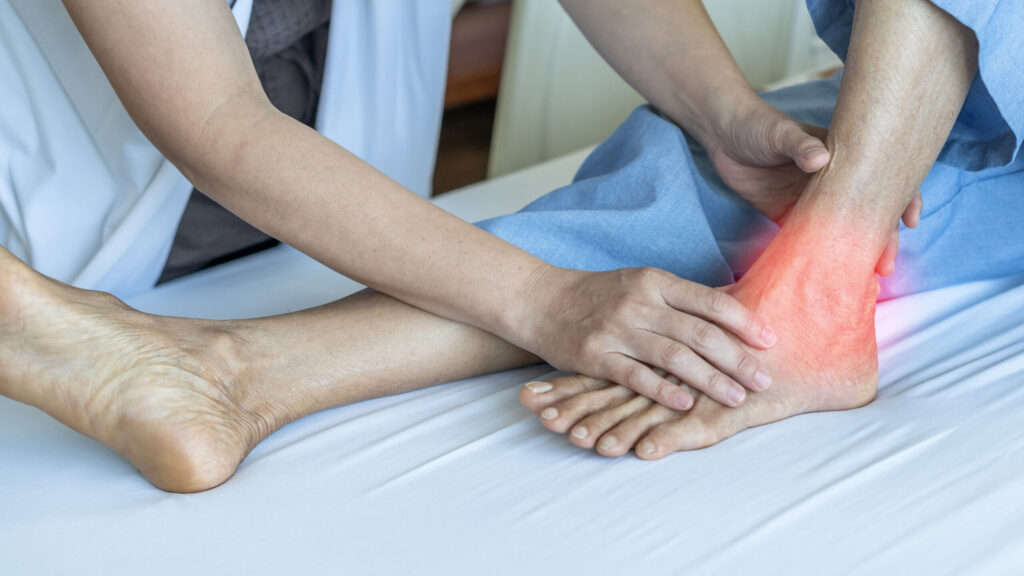
Joints Commonly Affected
What Causes Gout?
Gout develops when uric acid remains elevated in the bloodstream and forms sharp monosodium urate crystals in or around a joint. These crystals activate the body’s inflammatory response, causing the sudden pain, redness, warmth, and swelling associated with a gout attack.
Uric acid is a natural waste product created when the body breaks down substances called purines. The kidneys normally filter uric acid from the blood so it can leave the body through urine. Hyperuricemia, the medical term for high uric acid, can occur when the body produces too much uric acid or the kidneys do not remove enough of it.
Having an elevated uric acid level does not always mean that a person has gout. However, persistent hyperuricemia increases the likelihood that urate crystals will form over time.
Body-related factors
- Reduced kidney function
- Obesity or metabolic syndrome
- Dehydration
- Family history of gout
Diet & lifestyle
- Diet high in purines
- Frequent alcohol consumption
- Sugary drinks with high-fructose corn syrup
Medical triggers
- Certain diuretics and other medications
- Illness, injury, or surgery
- Rapid weight loss or sudden shifts in uric acid
Signs and Symptoms of Gout
The hallmark symptom of gout is sudden, severe joint pain that often develops overnight many patients describe an attack as one of the most painful conditions they’ve ever experienced.
Common Symptoms
- Sudden joint pain
- Redness and warmth
- Limited range of motion
- Lingering discomfort after an acute flare
- Swelling around the affected joint
- Tenderness to touch
- Difficulty walking or using the affected joint
During an Attack
- Intense throbbing pain
- Sharp stabbing discomfort
- Symptoms typically peak within 12–24 hours
- Burning sensations
- Extreme sensitivity, even from light pressure like bedsheets
- Can persist for days or weeks if untreated
Chronic Symptoms
- More frequent attacks
- Persistent inflammation
- Reduced mobility
- Multiple joint involvement
- Joint stiffness
- Tophi (uric acid crystal deposits under the skin)
Who Is at Risk for Gout?
Anyone can develop gout, but the condition is more common among people whose bodies produce excess uric acid or cannot remove it efficiently. Risk generally increases when several medical, genetic, medication-related, and lifestyle factors occur together.
- Man
More likely to develop gout earlier in life.
- Women
Risk tends to increase after menopause as hormonal changes affect how the kidneys process uric acid.
- Additional risk factors
- Personal or family history of gout
- Chronic kidney disease
- High blood pressure
- Obesity
- Diabetes or metabolic syndrome
- Frequent alcohol use
- Use of some diuretics
Understanding the Stages of Gout
Gout often progresses through several stages, making early treatment especially important.
Asymptomatic Hyperuricemia
Uric acid levels are elevated, but symptoms have not yet developed.
Acute Gout Attack
Patients experience sudden episodes of severe inflammation and pain.
Intercritical Gout
The period between attacks when symptoms may temporarily disappear.
Chronic Tophaceous Gout
Frequent flare-ups, permanent joint damage, tophi formation, and functional impairment.
How Gout Is Diagnosed
Accurate diagnosis is essential because gout symptoms can resemble other forms of arthritis and joint disease.
Medical History & Physical Examination
Your provider reviews symptom patterns, frequency of attacks, family history, current medications, and underlying health conditions. A physical exam helps identify inflammation, joint tenderness, and signs of chronic gout.
Blood Testing
Blood tests may evaluate uric acid levels, kidney function, and inflammatory markers. Some patients may have normal uric acid levels during an active flare.
Joint Fluid Analysis
Joint aspiration remains one of the most definitive diagnostic methods a fluid sample from the affected joint is examined under a microscope to identify uric acid crystals.
Imaging Studies
Ultrasound, X-rays, or advanced imaging may be used to assess crystal deposits and evaluate potential joint damage.
Common Treatments & Medications
Most gout treatment plans combine two goals: calming an active flare and lowering uric acid over the long term so future attacks become less frequent and less severe.
Medications for Acute Attacks
- Nonsteroidal anti-inflammatory drugs (NSAIDs)
- Colchicine
- Corticosteroids
- Prompt treatment can shorten attacks and reduce discomfort
Long-Term Uric Acid Lowering Therapy
- Preventing crystal formation
- Reducing flare frequency
- Protecting joints
- Preventing complications
- Requires regular monitoring and rheumatology follow-up
When Is Infusion Therapy Recommended for Gout?
Infusion therapy may be considered for certain patients with severe, chronic, or treatment-resistant gout when oral medications are ineffective, side effects limit treatment options, or significant uric acid reduction is needed.
- Gout remains uncontrolled
- Oral medications are ineffective
- Severe tophaceous gout is present
When Should You See a Rheumatologist for Gout?
A rheumatologist specializes in inflammatory arthritis and conditions affecting joints, muscles, and connective tissues. Consider scheduling an evaluation if:
- You've experienced more than one gout attack
- Multiple joints are involved
- Tophi have developed
- Kidney disease complicates treatment
- Symptoms are worsening
- Medications aren't working effectively
- Uric acid levels remain elevated
Gout vs. pseudogout, factor by factor
| Factor | Gout | Pseudogout |
|---|---|---|
| Crystal Type | Monosodium urate — needle-shaped crystals from excess uric acid. | Calcium pyrophosphate (CPP) — rhomboid-shaped crystals. |
| Most Common Joint | The big toe — a flare here is known as podagra. | The knee, though wrists and other joints are common too. |
| Under the Microscope | Needle-shaped crystals, yellow under polarized light. | Rhomboid crystals, blue under polarized light. |
| Sex Distribution | About 3 times more common in men than women. | Affects men and women in roughly equal numbers. |
| Typical Onset | Often begins in men in their 30s to 50s. | Mainly a disease of older adults, rising sharply after age 60. |
| Treatment Goal | Lower uric acid long-term with urate-lowering therapy; infusions like pegloticase for hard-to-treat cases. | Manage flare symptoms — no medication currently dissolves CPP crystals. |
What the data shows
9.2M adults
About 3.9% of U.S. adults live with gout, making it one of the most common inflammatory arthritis conditions nationwide.
- Source:
- CDC GOV
1:1
Gout runs roughly 3 to 1 in men over women, while pseudogout shows no meaningful sex difference at all.
- Source:
- PM&R KNOWLEDGE
3% → 50%
Pseudogout prevalence climbs from about 3% of people in their 60s to as many as half of people in their 90s.
- Source:
- HARVARD HEALTH
RA PREVALENCE RATE, BY SEX (AGE-STANDARDIZED INDEX)
Schedule a Gout Consultation in Delaware
Early diagnosis and personalized treatment can help reduce flare-ups, protect your joints, and improve your overall quality of life. Our rheumatology and infusion specialists are ready to help.
Why choose infusion center delaware
Experienced Rheumatology Care
Get gout care from experienced rheumatology professionals who understand the condition and its treatment.
Personalized Gout Treatment
Your treatment plan is tailored to your symptoms, medical history, and individual needs.
Comprehensive Gout Management
Care may focus on managing gout flares, reducing inflammation, and helping prevent future attacks.
Convenient Delaware Locations
Access gout and rheumatology care in Wilmington, Dover, and Milford, Delaware.
Patient-Centered Care
Receive individualized guidance and treatment designed to support your long-term gout management.
Meet Your Physician
Dr. Maged Hosny
More than 25 years of experience diagnosing and treating rheumatologic and musculoskeletal conditions, serving patients in Delaware and surrounding communities since 2000.
Our clinical team treats autoimmune and musculoskeletal conditions and provides access to biologic infusion therapy across three Delaware locations Wilmington, Dover, and Milford making ongoing appointments, lab monitoring, and recurring infusions more accessible statewide.
Areas Infusion Center of DE Serves in Delaware
Wilmington
- 4512 Kirkwood Hwy Wilmington, Delaware, 19808
- Mon, Tues, Wed, Thur, Fri
- Mon: 08:00 AM - 05:00 PM
- Tue: 08:00 AM - 05:00 PM
- Wed: 08:00 AM - 05:00 PM
- Thu: 08:00 AM - 05:00 PM
- Fri: 08:00 AM - 04:00 PM
- Sat: Closed
- Sun: Closed
Dover
- 260 Beiser Blvd Dover, Delaware, 19904
- Mon, Tues, Wed, Thur, Fri
- Mon: 08:00 AM - 05:00 PM
- Tue: 08:00 AM - 05:00 PM
- Wed: 08:00 AM - 05:00 PM
- Thu: 08:00 AM - 05:00 PM
- Fri: 08:00 AM - 04:00 PM
- Sat: Closed
- Sun: Closed
Milford
- 2000 Brent Jordan Way Milford, Delaware, 19963
- Mon, Tues, Wed, Thur, Fri
- Mon: 08:00 AM - 05:00 PM
- Tue: 08:00 AM - 05:00 PM
- Wed: 08:00 AM - 05:00 PM
- Thu: 08:00 AM - 05:00 PM
- Fri: 08:00 AM - 04:00 PM
- Sat: Closed
- Sun: Closed
FAQS ABOUT GOUT - INFUSION CENTER OF DELAWARE
At the Infusion Center of DE, a rheumatologist treats gout by managing acute attacks, prescribing urate-lowering medications, offering infusion therapies like pegloticase, and providing lifestyle and dietary guidance to improve symptoms and quality of life.
Trusted Gout Delaware Treatment
Experience expert care and compassion for Gout Delaware at the Infusion Center of DE. Visit or book today.